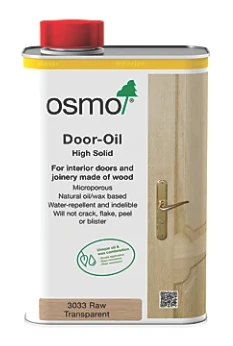
Osmo Door-Oil 3033 Raw Transparent
The oil used in our project, sold by Screwfix as item 343YM. Shake thoroughly before use so the light pigments are evenly mixed.
View the product at Screwfix ↗ Tobias YoungJoinery & Maintenance
Practical advice · Oak internal doors
What door oil does, what you need and how to apply Osmo Door-Oil 3033 Raw Transparent — with an oak-door finishing project from Tobias Young Joinery & Maintenance.
Why finish an oak door?
Unfinished oak doors can absorb moisture and pick up dirt and marks during everyday use. A suitable door finish helps provide a more water- and dirt-resistant surface while retaining the appearance and grain of the timber.
For this project, we used Osmo Door-Oil 3033 Raw Transparent, sold by Screwfix as item 343YM (1 litre). Its oil-and-wax formula is designed for suitable interior wooden doors. The light white pigment helps retain oak's natural, untreated-looking colour rather than creating a strong glossy or wet-look finish.
Important: Even a raw-look finish can appear different on different timber. Test a discreet area first and check the door manufacturer's instructions, particularly for veneers and factory-finished doors.
Our own project
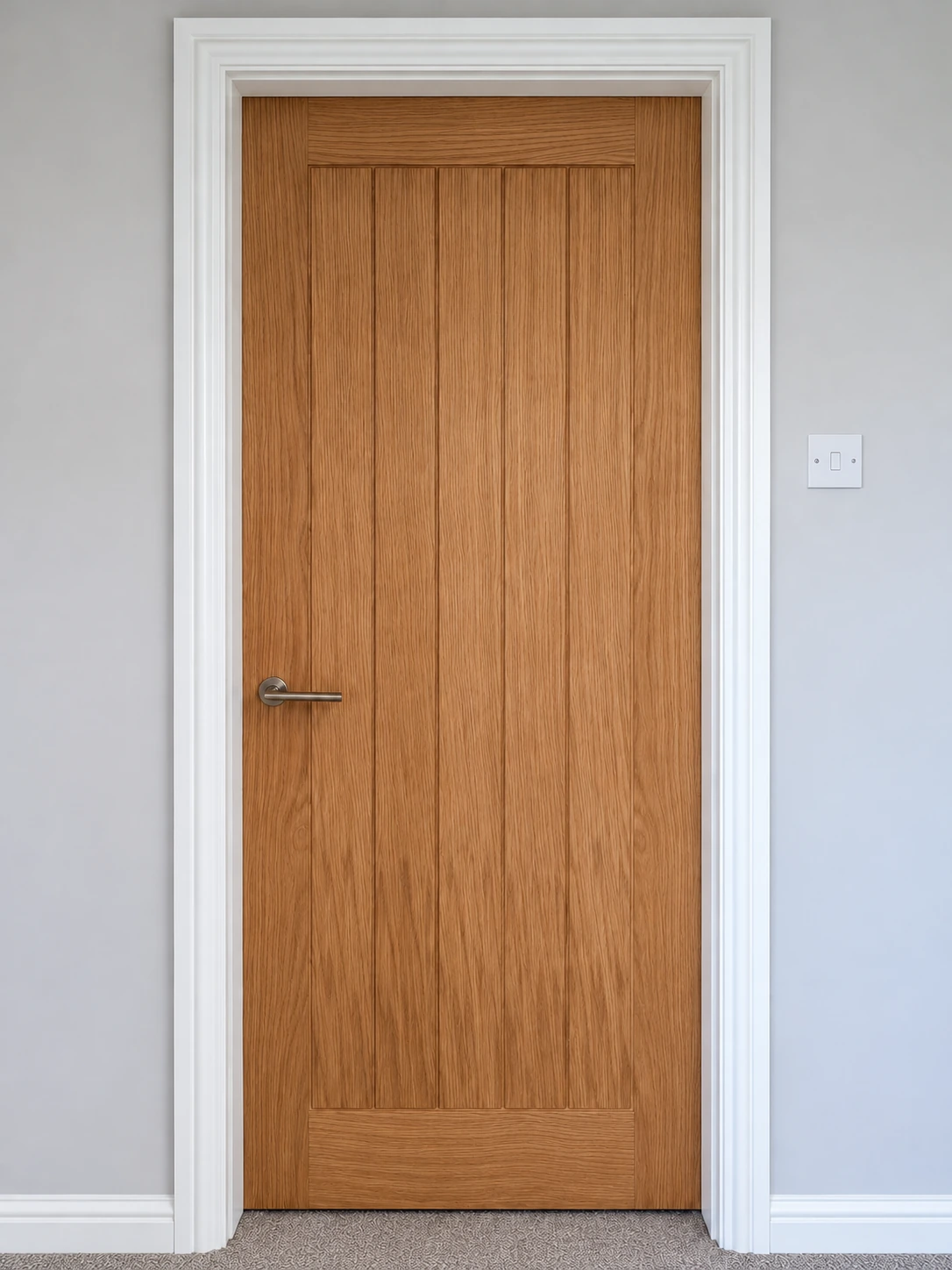
These before-and-after illustrations are based on photographs of an oak internal door we installed and treated with Osmo Door-Oil 3033 Raw Transparent. They show the natural style of finish we aim for, with the wood's character and grain clearly visible.
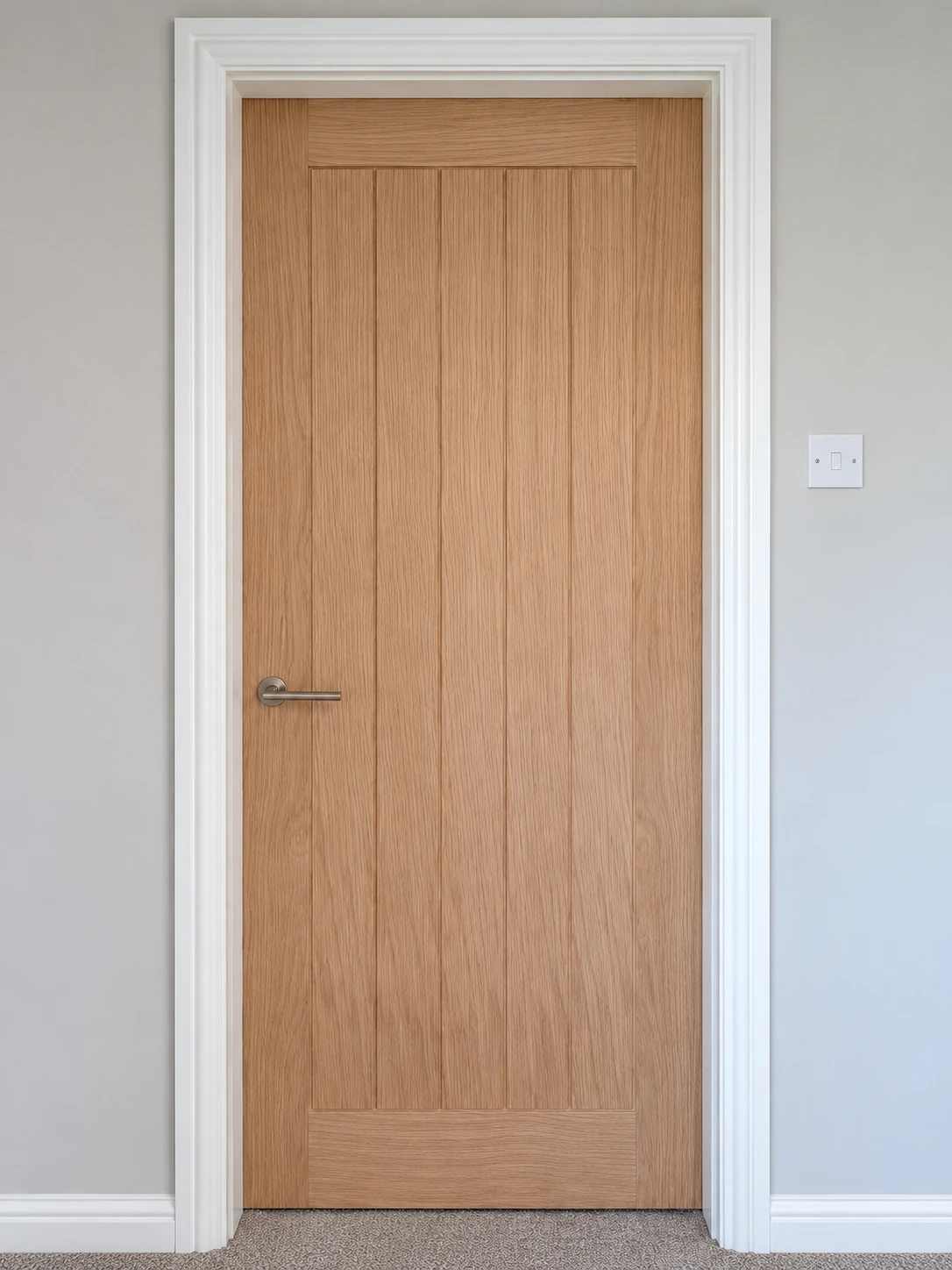
Illustrative views based on photographs of our own installation. The appearance of a finished oak door will vary with the timber, light and application.
What you'll need
For our project, we used Osmo Door-Oil 3033 Raw Transparent (Screwfix 343YM) and a clean, lint-free craftsman's cloth. Osmo recommends a flat brush or microfibre roller; we prefer cloth application for careful control.
The oil used in our project, sold by Screwfix as item 343YM. Shake thoroughly before use so the light pigments are evenly mixed.
View the product at Screwfix ↗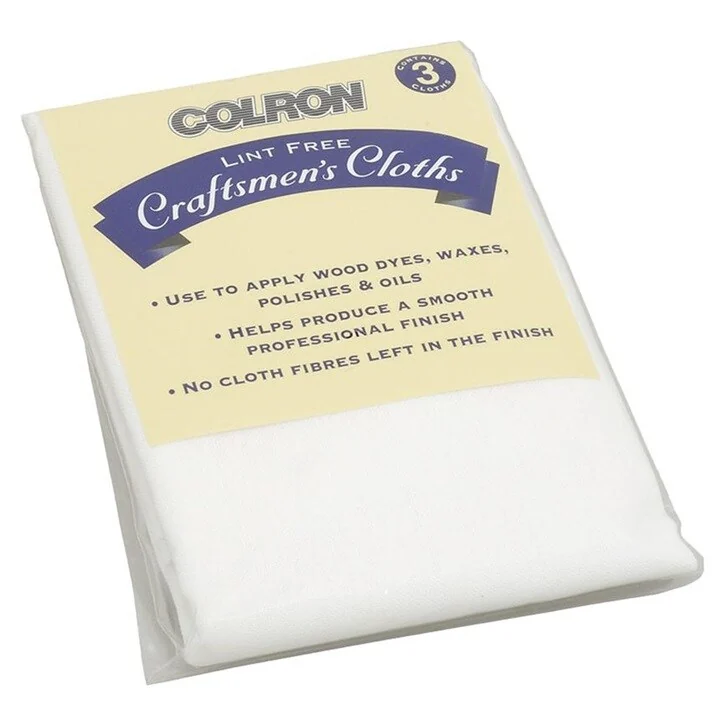
Our preferred way to work a little oil carefully along the oak grain and into the grooves. Wipe away excess and follow the manufacturer’s full finishing instructions.
Cloth product information ↗Step-by-step method
Follow the instructions on the tin. Here we explain Osmo's recommended brush-or-roller method alongside the lint-free cloth technique we prefer in our own work.
Fire safety: Cloths used to apply Osmo Door-Oil can generate heat as the oil dries, creating a risk of spontaneous ignition if left crumpled or piled together. After use, follow Osmo's safety instructions: allow the cloths to dry completely, spread out flat in a safe location, or place them in a closed metal container before proper disposal.
Practical questions
Osmo Door-Oil is suitable for some selected veneered doors, but you must check the door manufacturer's finishing and warranty instructions first. Never assume all veneers can be oiled or sanded.
Osmo 3033 Raw is designed to preserve a light, untreated appearance rather than create a strong wet look. The result still depends on the timber and preparation, so always test a small area.
Osmo recommends two thin coats for a new Door-Oil finish. In our work, we normally apply one carefully worked-in coat using a lint-free cloth, which gives the oak a natural, even finish. Customers wishing to apply a second coat can do so once the first has dried, following Osmo's instructions for the recommended level of protection.
Osmo's general guidance includes cloth application for some finishes. We prefer a cloth for its control around the grain and grooves. For Door-Oil 3033 specifically, Osmo's recommended method is a flat brush or microfibre roller with two thin coats.
Osmo UK gives a typical drying time of 12–24 hours, depending on conditions. Avoid heavy handling until the finish has dried and cured sufficiently, and don't rush the second coat.
Use a soft cloth and Osmo's recommended care products, such as its Spray Cleaner. Avoid harsh household cleaners and Liquid Wax Cleaner on 3033 Raw, as it can increase the sheen.
Internal door supply & fitting
Tobias Young Joinery & Maintenance supplies and fits internal doors for homes and commercial properties across the East Midlands — from one replacement door to a whole-property project.